Grocery Shopping 2011
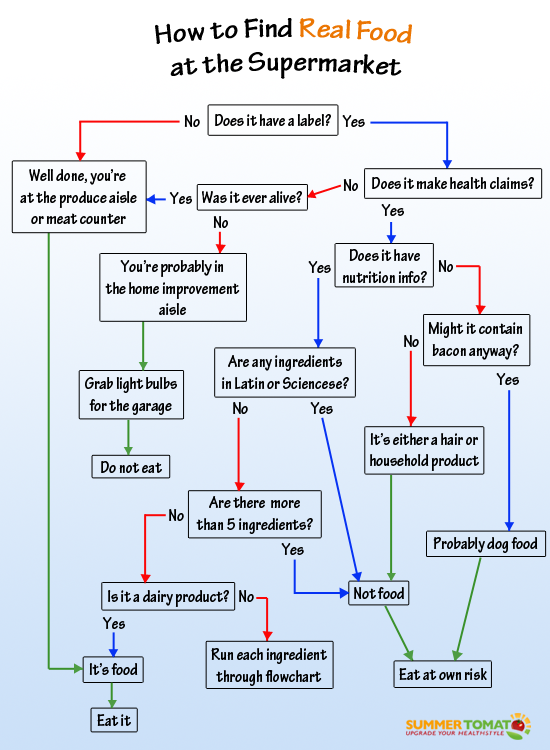
Thanks to Michaela Dunn Leaper for Facebooking this! Thanks to Darya Pino for saying so succinctly what we've all been saying for years!
Thanks to Michaela Dunn Leaper for Facebooking this! Thanks to Darya Pino for saying so succinctly what we've all been saying for years!

One of the joys of parenthood is being able to compare the cute things that they say and do. And with three of them, I live in a target rich environment. I try to keep track of these little stories. If not for my own amusement, I figure they'll provide pocket money for me in the future. There's money to be made in extortion, after all...
Recently, I had Bug and Princess in the car with me while Dog was at Drama practice. We'd had several days of torrential rain and we had to pick up Tool Guy from work, since the rain was preventing him from riding The Bike. Getting into the car, there was a slight squabble over who was going to sit on which side. Sigh. Some days I miss my Soccer Mom Van. Fortunately, this was quickly soothed over as we began to be on the lookout for the spontaneous freshets and rivulets appearing down the hillsides. At one curve, Bug burst out into an impressed roar--we're working on volume modulation with this one--at the gusher that was cascading out of a hillside culvert. Princess was quite crestfallen that she wasn't sitting at such an angle as to be able to see this impressive wonder of nature. Bug sanctimoniously informed her that this was precisely the reason why he'd wanted to sit on this particular side of the car. After an extended period of silence, she primly replied, "That can't be true, Bug...you had no way of knowing that we were going to see that!" She'll be a match for any telemarketer, that's for sure.
The Hostess caught up with me in Nitty Gritty Cooking Class the other day to compare notes on tortillas. Her family thinks the bean flour tortillas rock, too. She started chuckling when she told me that she had to share One of Those stories with me...a tortilla story.
The plan for the evening meal was tortillas. The family had returned home from a strenuous hike and Mrs. Hostess felt the need to lie down before beginning to get dinner ready. The tortilla dough was prepped up and ready to be made up. Her youngest son, a six year old who looks like Johnny Whitaker but for the curls and has all of the energy of Tom Sawyer, volunteered to help roll the tortilla dough into balls while Mrs. Hostess rested for a half an hour. Seemed like a reasonable request, so she agreed and went to lie down. From time to time, Johnny would come in and regale her with his efforts, which included a rather credible penguin. He nodded when she reminded him that these would be flattened shortly and went back to his endeavors.
She tells how the family gathered around the table after she'd made up the tortillas and began to dig in with relish, tortillas being a popular menu item. Biting in, however, the consensus was that these tortillas were somehow just not quite as yummy as past tortillas. Rather tough, in fact. Trying to pin down the variable, the new tortilla press was the first suspect. Was there some indefinable contribution that hand rolling them possessed that a press did not? She was beginning to regret the investment.
Then her father piped up with a previously unsuspected and uncontrolled--the word having multiple meanings here--variable. It seems that Johnny had been quite enthusiastic in his dinner preparation efforts. The separating the dough into balls hadn't quite scratched his artistic efforts sufficiently and neither had penguins. While everyone else was otherwise engaged, Grandpa lounged on the couch, observing these machinations...apparently with no little amusement and absolutely no intervention. Johnny, it seems, waxed quite creative and discovered that dough not only made penguins, but entire arm-casts as well. The additional squick factor being that he had a still healing war wound from an argument lost with a bicycle a few days prior. The older siblings were horrified, while Mrs. Hostess and another sibling dissolved into tears of helpless laughter. Which horrified the older siblings further, since Johnny would undoubtedly interpret this as endorsement and reach for new heights of food malfeasance.
Mr. Hostess asked Johnny if he had, at any time, dropped the dough. He gravely confirmed the additional transgression, but qualified it with the assurance that an older sister had recently swept the floors, making this okay. Heh.
Those of us standing in the kitchen while Mrs. Hostess spun out this tale were equally entertained by this story. Johnny, meandering through to gym class, found himself ambushed by entering in on the tale end of the telling. Mrs. Hostess turned to him and asked if he wanted to add his own details. With an expression somewhere between annoyance and disgust, he retreated down the hall, pursued by peals of maternal merriment as we moms in the kitchen collapsed into gales of helpless giggles. Really, you can dress us up...
I decided to harness this enthusiasm for playing with clay that I find in my own offspring. Modeling clay will often assuage this primal drive, since they don't care for the texture of homemade gf play dough and I don't care for the price of hypo-allergenic commercial ones. Recently, we were discussing as a family what foods we missed most in this Everything Free journey. With all the options still open to us, I'm 99.9% content. The only thing that I miss is pretzels. The commercial replacements are tolerable, but replete with soy and/or corn. So I decided to try my hand...and Hobbit hands...at sourdough pretzels.
Sourdough Pretzels
The first few attempts at this revealed that this is going to be a work in progress. Lots of variables in this one: rise time, boiling time, baking time, and, not the least, thickness which is extremely variable, particularly when drafting "help."
2 cups sourdough starter
1 1/2 cups potato starch flour
1 tsp. guar gum
2 T olive oil
1 tsp. salt
1/4 cup flax meal (opt.)
Granular or kosher salt for sprinkling
Using a dough hook, mix/knead all of the ingredients until a solid dough. It will be rather tacky, so olive oil on the hands while rolling these into shapes is helpful. Pull off a hunk and gently roll out into dough "pencils." Thicker shapes will be chewier and thinner will be crispier. On lightly greased baking sheets, allow the pretzels to rise for a few hours. They will begin to dry out and stiffen, which will allow for easier handling during the next steps.
In a large pot or dutch oven, bring a couple of quarts of water to boil. Using an egg turner, gently remove the pretzels from the sheets and drop into boiling water, a few at a time. Allow to boil for 30-60 seconds and fish out with a strainer. Return to greased baking sheets and sprinkle with salt, if desired.
Bake for 30-45 minutes at 350*, depending on desired texture.
I'm learning, as I delegate more to the Hobbits, that I have to surrender some standards and expectations--at least momentarily!--to allow them to develop their own skills and senses of accomplishment. Even if it means tortilla arm-casts...

All signs of blizzard long past, my plant friends are returning to visit again. Princess and I have meandered hand-in-hand around the yard and the neighborhood, looking for them. I don't think I've ever been so grateful for a springtime.
After two consecutive years of gardening disaster, I and my pantry are quite ready for a bumper year, thankyouverymuch. I continue to refine my favorites for planting. Still playing with Siberian strains of tomatoes to see if their yields and growing season will give me a leg up on the varieties from Southern hemispheres. Which doesn't mean I'm not hedging my bets. There's room for the handy-dandy hybrids that are tried and true. And delicious. There are plenty of arugula and deer tongue lettuce representing this year. I never got around to saving seeds when everything bolted last fall. Then I never got around to tilling, something that I'm trying to break myself of anyway. I'm enjoying the blessings of my neglect. Also I've decided to yield place to anything that volunteers. Even volunteer dandelion.
With spring in the air, herbal studies have taken on a new earnestness. During the wintertime, we were using the fruits of the summer and applying what we've learned, but with the expression of new yields, we have an opportunity to try new things and grow new things that we regretted not having explored the previous year. The first herbal studies group focused on dandelions and the first wild greens of spring. The group leader tasked everyone with bringing a dandelion dish to the class. She asked me what I had planned on bringing. "Um...kimbop?" It's my favorite pot luck dish and never fails to please. I never have left-overs. I meditated for a minute or two, then recollected that my kimbop tutor had always included spinach in her particular recipe. Hmmm...spinach...dandelion. Yep. That'll sub. I'll bet I'm the first person ever to make dandelion kimbop. Close your eyes, SMK.
We talked about dandelion and the terrific stuff it does for the liver, the lymphatic system, and as a diuretic. This is a fortunate serendipity, since Tool Guy has had some unhappy swelling in one of his feet that hasn't explained itself to his doctor, despite extensive testing. Can't think of many gardeners who celebrate having dandelion popping up in their greenhouses, but I'm one of them. It seems that chickweed, my latest favorite herb for lung support, also sparkles as a diuretic.
Ditto on sweet violets.
Sheep sorrel is another mild diuretic. And guess what all grows in my yard? I never cease to be amazed at the reckless and extravagant abundance that is to be found just outside my door. See how much I have to be thankful for?
I have another ubiquitous friend invading my faltering asparagus bed which I've identified as garlic mustard.  It's considered an invasive and noxious weed, which I've come to interpret as meaning, "We don't have a clue how to use it and the deer won't eat it." But in fresh salad, it has a terrific mild garlicky taste--without the garlic drawbacks. I've found references to the root being a horseradish substitute, something that bears future exploration...
Fresh is almost always best, so we're plunging into the salad days of spring. In order to make these oddities more acceptable to Philistinian palates, a salad dressing is required. Something light, yet compatible with the somewhat bitter and sharp flavors of the unusual greens. A while back, a foodie friend had made an off-hand comment about using orange juice in salad dressing and this sounded like just the salad to try it on.
Orange and Olive Oil Dressing
1/2 cup orange juice, best freshly juiced
3/4 cup extra virgin olive oil
1/2 tsp. Real Salt
1 tsp. dried basil
1 tsp. maple syrup
1/2 tsp. dried dill
3 grinds of whole peppercorn
Run all ingredients through a thorough blend in food processor or blender. Best served at room temperature. Not only does this make a wonderful salad dressing, but also serves as a terrific sauce over fish.
Intrepidly, I took to the yard with basket and scissors in hand. I'm sure I cut quite the figure. I've come to imagine that my neighbors have either given up trying to figure out what I'm doing or avail themselves of a front row and provide themselves with a tasty snack to sustain them during the morning's entertainment. When Tool Guy came home, I pointed out the separate containers of washed and chilled greens for his delight and delectation. He was duly impressed. He turned to my mother and said, "Most families throw their lawn clippings on the compost pile. We eat them." See what I mean? Philistine. But he's going to eat his words. Every. Single. One. With salad dressing.

 Posts
All Comments
Posts
All Comments